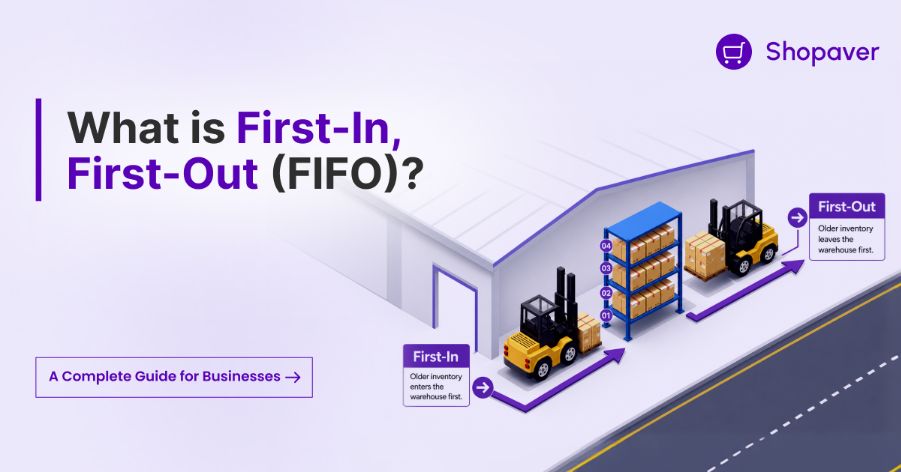
In business inventory management, understanding how stock moves are very important for profitability and efficiency.
One of the most widely used concepts is the First-In First-Out meaning, which ensures that the oldest inventory is sold or used before newer stock.
This method is especially important for retail, grocery, pharmacy, and food businesses where product freshness and accurate valuation matter.
To manage this effectively, companies rely on FIFO Systems, which help streamline inventory flow and reduce wastage.
In this guide, we will explain FIFO Systems, how they work, and why they are essential for modern businesses.
What is First-In First-Out (FIFO)?
The First-In First-Out meaning is simple: the first items purchased or produced are the first ones sold or used.
This means older stock is always moved out before newer stock enters sales or production.
Businesses use FIFO Systems to maintain proper stock rotation and ensure accuracy in inventory tracking.
In simple terms: Old stock goes out first and new stock stays in inventory
This is one of the most practical approaches used in inventory valuation methods.
How FIFO Systems Work in Business
FIFO Systems work by tracking inventory based on purchase order dates.
For example:
- Stock purchased first is recorded as the first to be sold
- Stock purchased later is sold only after older stock is finished
This ensures proper flow of goods and prevents product expiration or wastage.
Many retail and grocery businesses depend on FIFO Systems to maintain efficiency and reduce losses.
FIFO Inventory Method Explained
The FIFO inventory method is an accounting and inventory tracking system where goods are sold in the order they are purchased.
Businesses using the FIFO inventory method benefit from:
- Accurate stock valuation
- Reduced wastage
- Better profit calculation
Different FIFO methods can be applied depending on business size and type, but the core principle remains the same.
In most FIFO Systems, inventory is always managed chronologically to ensure smooth operations.
FIFO Examples in Real Business Scenarios
Let’s understand with FIFO examples:
Grocery Store
Older vegetables and dairy products are sold first to avoid spoilage.
Retail Store
Clothing from older collections is sold before new seasonal stock.
Pharmacy
Medicines with earlier expiry dates are sold first.
Restaurant
Ingredients purchased earlier are used first to maintain freshness.
These FIFO examples clearly show how FIFO Systems help businesses reduce waste and improve efficiency.
FIFO vs LIFO Comparison
Understanding FIFO vs LIFO is important for inventory decision-making.
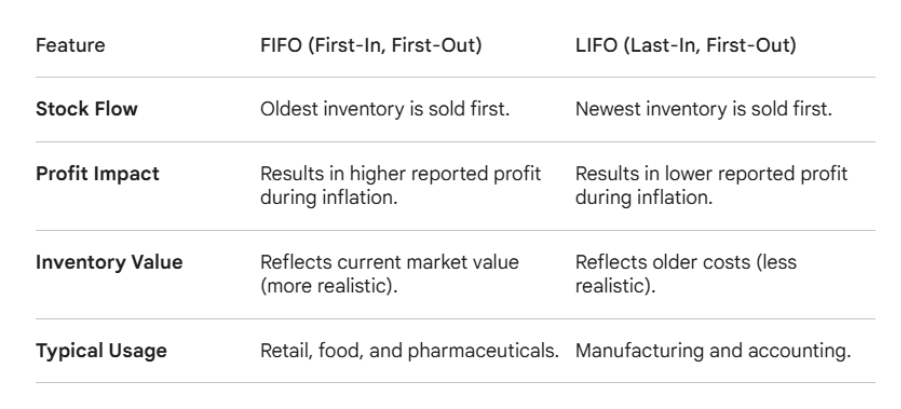
In most businesses, FIFO Systems are preferred because they reflect real stock movement and support better financial reporting.
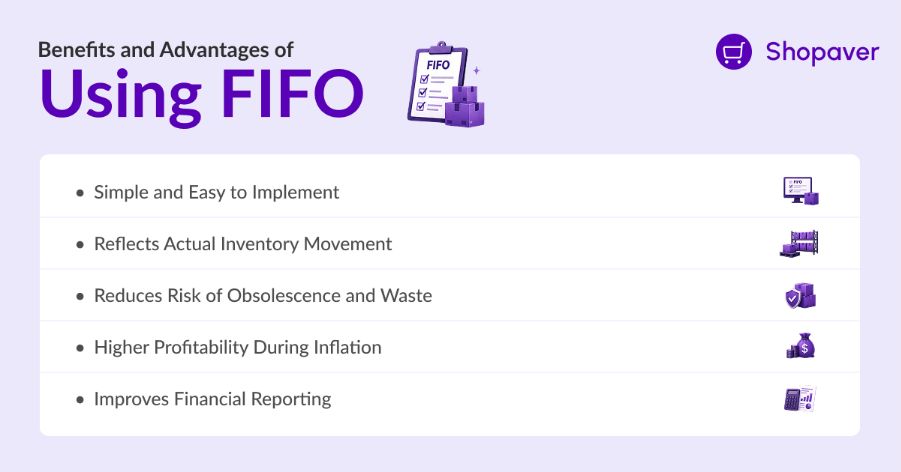
Benefits and Advantages of Using FIFO
The FIFO methods offer several benefits:
1. Simple and Easy to Implement
The FIFO inventory method is one of the simplest inventory valuation methods used by businesses. Based on the First-In First-Out meaning, it ensures that the oldest stock is sold first.
Among different FIFO methods, this approach is easy to understand and implement, even for small businesses using basic FIFO inventory systems.
2. Reflects Actual Inventory Movement
The fifo inventory approach closely matches real-world operations. In most businesses, older stock is naturally used or sold before new stock arrives.
This makes first in first out stock control highly practical and accurate compared to other inventory valuation methods.
3. Reduces Risk of Obsolescence and Waste
Using the FIFO inventory method ensures that older items are sold first, reducing the chances of stock becoming outdated or expired.
This is one of the biggest advantages of FIFO methods, especially for businesses dealing with perishable or seasonal products.
4. Higher Profitability During Inflation
When comparing FIFO vs LIFO, FIFO often results in higher reported profits during inflation. Since older, lower-cost inventory is recorded as sold first, the cost of goods sold is lower, improving margins in fifo inventory systems.
5. Improves Financial Reporting
The FIFO inventory method provides a more accurate closing stock value because it reflects current market prices. This improves financial statements and makes FIFO one of the most reliable inventory valuation methods for reporting.
6. Globally Accepted Accounting Method
The First-In First-Out meaning is widely recognized under global accounting standards. Unlike some alternatives in the FIFO vs LIFO debate, FIFO is accepted across most countries, making it a preferred choice for businesses operating internationally.
7. Better Inventory Management
With proper first in first out stock control, businesses can manage stock more efficiently. FIFO inventory systems help maintain the right stock levels, avoid overstocking, and ensure smooth inventory flow.
8. Perfect for Perishable Goods Businesses
The FIFO inventory method is ideal for industries like food, pharma, and cosmetics. Since fifo inventory prioritizes older stock, it ensures product freshness and quality, reducing waste and maintaining safety standards.
9. Easier Auditing and Compliance
Among all inventory valuation methods, FIFO is the easiest to audit. The logical flow of FIFO methods makes it simple for auditors to track inventory movement and verify records without confusion.
10. Supports Better Decision-Making
Accurate data from FIFO inventory systems helps businesses make smarter decisions. Whether it’s pricing, purchasing, or comparing FIFO vs LIFO, FIFO provides clear insights that support better planning and growth.
Because of these benefits, FIFO Systems are widely used in MSMEs and retail businesses.
FIFO in Inventory Valuation Methods
Among different inventory valuation methods, FIFO is one of the most widely accepted.
It helps businesses:
- Maintain accurate stock valuation
- Reflect real cost of goods sold
- Improve financial reporting accuracy
This is why FIFO Systems are considered essential in accounting and inventory management.
Step-by-Step FIFO Example
Let’s understand FIFO with a practical example:
Scenario:
A business purchases products at different prices:
- 100 units at ₹10 each
- 100 units at ₹12 each
Now, the business sells 150 units.
FIFO Calculation:
- First 100 units sold → ₹10 each = ₹1,000
- Next 50 units sold → ₹12 each = ₹600
Total Cost of Goods Sold (COGS):
₹1,000 + ₹600 = ₹1,600
Remaining Inventory:
- 50 units left at ₹12 each = ₹600
This is one of the simplest FIFO examples to understand how costs are calculated.
In conclusion, FIFO Systems play a crucial role in modern business operations. By following the First-In First-Out meaning, businesses can ensure better inventory control, reduced wastage, and improved profitability.
Whether you are running a retail store, restaurant, or pharmacy, implementing FIFO Systems helps you stay organized and financially accurate.
Understanding FIFO inventory method, comparing FIFO vs LIFO, and using proper FIFO methods can significantly improve your business efficiency.
With real-world FIFO examples, it becomes clear that FIFO is one of the most reliable inventory valuation methods for growing businesses.
Frequently Asked Questions (FAQs)
Q1. What is the First-In, First-Out (FIFO) method?
Ans- The First-In, First-Out (FIFO) method is an inventory system where the oldest stock is sold or used first.
It helps businesses reduce waste, especially in retail, grocery, and food industries.
Q2. Why are FIFO Systems important for businesses?
Ans- FIFO Systems help businesses maintain proper stock flow, avoid expired products, and improve inventory accuracy.
They also make profit tracking and stock management much easier and more organized.
Q3. What is the difference between FIFO and LIFO?
Ans- FIFO means “first in, first out,” where old stock is sold first. LIFO means “last in, first out,” where the newest stock is sold first.
Most businesses prefer FIFO Systems because they reflect real inventory movement more accurately.

Narendra Kumar is a skilled content writer crafting engaging and insightful content.