Seamless and secure payment processing has become essential. Whether you run an e-commerce store or SaaS platform, customers expect fast checkout experiences.
This is where the need to Integrate a Payment Gateway becomes critical for modern billing systems, ensuring secure and automated transactions.
Businesses that Integrate a Payment Gateway can improve customer experience by supporting multiple payment options like UPI, cards, and net banking while reducing payment failures.
As digital payments continue to grow, companies that Integrate a Payment Gateway gain speed, security, and scalability advantages.
What is a Payment Gateway?
A payment gateway is a technology that acts as a bridge between a customer’s payment method and the merchant’s bank account. It securely captures and transfers payment data during online transactions.
It encrypts sensitive information such as card details and ensures safe communication between the customer, merchant, and bank.
A modern payment gateway API enables developers to connect billing software with payment systems, automate transactions, and manage real-time payment processing efficiently.
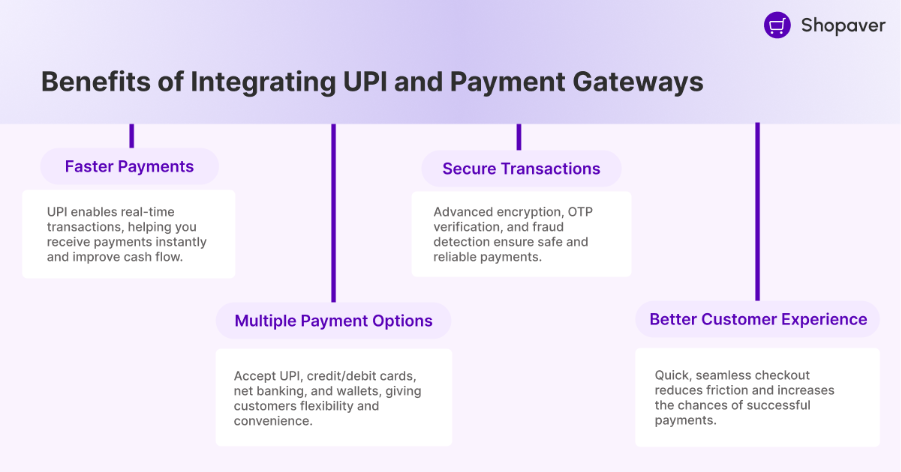
Benefits of Integrating UPI and Payment Gateways
When businesses Integrate a Payment Gateway, they simplify billing, reduce manual errors, and speed up payments.
It also improves scalability, supports multiple payment methods, enhances customer experience, and ensures better cash flow, security, and system reliability.
Here are 6 key ways businesses benefit when they Integrate a Payment Gateway:
1. Faster Payments
UPI enables real-time transactions, helping you receive payments instantly and improve cash flow.
2. Multiple Payment Options
Accept Cash, UPI, and credit/debit cards, giving customers flexibility and convenience.
3. Better Customer Experience
Quick, smooth checkout reduces friction and increases the chances of successful payments.
4. Improved Cash Flow Management
Instant and trackable payments make it easier to manage finances and plan business operations.
5. Secure Transactions
Advanced encryption, OTP verification, and fraud detection ensure safe and reliable payments.
6. Easy Reconciliation
Automatically track and match payments with invoices through integrated dashboards.
How to Add Payment Gateway to Your Website (Step-by-Step)
Step 1: Choose a Payment Gateway Provider
The first step is to select a reliable provider that fits your business needs. To Integrate a Payment Gateway, ensure the provider supports your currency, payment methods, and security requirements.
Step 2: Configure API Credentials
To successfully Integrate a Payment Gateway, you must obtain API keys and authentication credentials. These allow secure communication between your billing software and the payment system.
Step 3: Implement and Test Integration
Before going live, you should Integrate a Payment Gateway in a sandbox environment. This helps you test transactions, validate responses, and fix errors before real payments are processed.
What is Payment Gateway API & Its Role in Integration?
The Payment Gateway API is the core component that connects billing software with the payment processor. It enables sending transaction requests, receiving payment responses, and confirming successful payments in real time.
When you Integrate a Payment Gateway, the API ensures secure and structured data exchange between systems. It simplifies development, reduces manual intervention, and improves overall transaction reliability.
Common Payment Gateway Integration Challenges and Solutions
While businesses attempt to Integrate a Payment Gateway, they may face issues such as API errors, transaction failures, or security vulnerabilities. These challenges often arise due to incorrect configuration or outdated documentation.
Proper error handling, regular updates, and strong encryption methods like SSL and tokenization can resolve most issues. Choosing a trusted provider also makes it easier to Integrate a Payment Gateway without technical disruptions.
How to Ensure Smooth Payment Gateway Integration (Best Practices)
To ensure a smooth payment experience, businesses should follow key best practices such as using secure APIs, regularly updating systems, and monitoring transaction logs.
It is also important to maintain compliance with security standards like PCI-DSS and implement proper authentication methods. These practices help maintain system reliability after you Integrate a Payment Gateway.
In conclusion, modern businesses cannot afford inefficient payment systems. Choosing to Integrate a Payment Gateway helps organizations simplify transactions, enhance security, and improve customer trust.
With the right tools, APIs, and best practices, businesses can create a seamless payment experience that supports long-term growth in the digital economy.
FAQs
Q1. What does it mean to integrate a payment gateway?
Ans- It means connecting billing software with a secure payment system to process online transactions automatically
Q2. Is a payment gateway API necessary for integration?
Ans- Yes, the payment gateway API is essential as it enables communication between your software and the payment processor.
Q3. Is internet banking required to use a payment gateway?
Ans- No. Internet banking is not required. Businesses only need a valid bank account and complete KYC verification to activate most payment gateway services.

Narendra Kumar is a skilled content writer crafting engaging and insightful content.