Inventory management plays a major role in the success of any business. Whether you run a retail shop, supermarket, warehouse, manufacturing unit, or eCommerce brand, managing stock correctly helps improve profits, reduce waste, and maintain smooth operations.
One of the most important decisions businesses make is choosing the right inventory valuation method. The debate around FIFO vs LIFO is common because both methods impact taxes, profits, inventory value, and financial reporting differently.
Understanding how these inventory methods work can help businesses make smarter financial decisions and improve stock control.
In this guide, we will explain the differences, benefits, drawbacks, and practical applications of FIFO vs LIFO so you can decide which method fits your business best.
What is FIFO?
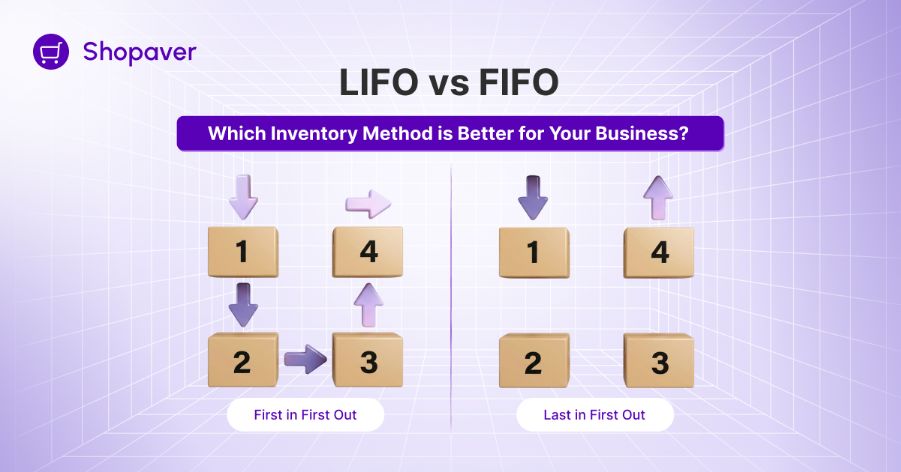
The FIFO inventory method stands for “First-In, First-Out.” The First-In First-Out meaning is simple: the oldest inventory items are sold first, while newer inventory remains in storage.
For example, if a grocery store receives milk on Monday and another shipment on Thursday, the Monday stock should be sold first to prevent spoilage.
This approach closely matches real-world inventory movement, especially in industries dealing with perishable or fast-moving products.
How FIFO Works
Under the FIFO inventory method, businesses assume:
- Older stock gets sold first
- New inventory stays in storage
- Earlier inventory costs are recorded before newer costs
Many businesses prefer FIFO methods because they are easy to understand and practical for daily operations.
Businesses That Commonly Use FIFO
- Grocery stores
- Restaurants
- Pharmacies
- Fashion retailers
- Electronics stores
- Warehouses
- eCommerce sellers
Companies using advanced FIFO inventory systems can automate stock rotation and reduce inventory waste significantly.
What is LIFO?
LIFO stands for “Last-In, First-Out.” In the discussion of FIFO vs LIFO, LIFO works in the opposite way compared to FIFO.
Under LIFO:
- The newest inventory is sold first
- Older inventory remains in stock
- Recent inventory costs are recorded first
This method is mainly used for accounting purposes rather than physical inventory movement.
For example, if a hardware store buys steel at different prices throughout the year, LIFO assumes the latest purchased steel is sold first.
Key Differences Between FIFO vs LIFO
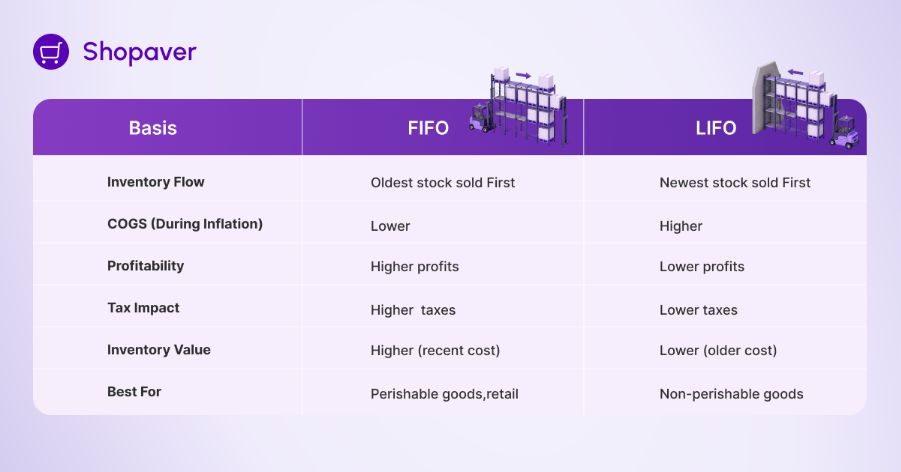
Understanding the differences between these methods helps businesses select the most suitable inventory strategy.
When comparing FIFO vs LIFO, the major difference lies in how inventory costs are
Businesses evaluating FIFO vs LIFO should consider product type, industry, taxation, and inventory movement.
This comparison makes it easier for business owners to understand which method aligns with their operational goals.
What are the main advantages of FIFO in inventory?
The FIFO inventory method offers several operational and financial benefits.
1. Better Stock Rotation
The biggest benefit of first in first out stock control is improved inventory freshness. Old products leave the warehouse first, reducing spoilage and dead stock.
2. More Accurate Inventory Value
Since newer products remain in storage, inventory valuation reflects current market prices more accurately.
3. Easier Inventory Management
Businesses using fifo inventory systems often find inventory tracking simpler and more organized.
4. Ideal for Perishable Goods
Food items, cosmetics, medicines, and fashion products benefit greatly from FIFO because these products have shorter shelf lives.
5. Improved Financial Transparency
Many accountants prefer FIFO because it produces clear financial reports and easier auditing.
Retail stores and warehouses often combine FIFO inventory tracking with smart billing systems to improve operational accuracy.
What are the main disadvantage of LIFO in accounting?
Although FIFO is widely preferred, LIFO also offers specific financial benefits.
1. Lower Tax Liability
One advantage in the FIFO vs LIFO debate is that LIFO can reduce taxable income during inflation because higher inventory costs are recorded first.
2. Better Matching of Current Costs
LIFO reflects current market costs in the cost of goods sold calculation.
3. Useful During Inflation
Businesses facing rapidly rising inventory costs may benefit from LIFO accounting methods.
However, physical inventory movement under LIFO is less practical for many industries.
FIFO vs LIFO: Key Disadvantages Explained
Every inventory method has limitations.
FIFO Disadvantages
- Higher profits may increase taxes
- Not always ideal during inflation
- Requires proper stock rotation discipline
LIFO Disadvantages
- Older inventory may become obsolete
- Financial statements may not reflect current inventory value
- Complex accounting process
- Less suitable for retail and food businesses
When analysing FIFO vs LIFO, businesses must balance tax savings with operational efficiency.
Best Inventory Method for Different Businesses
The best inventory method depends on industry type, product category, and business goals.
Retail Stores
Retailers usually prefer FIFO because products move regularly and customers expect fresh inventory.
Supermarkets and Grocery Shops
Perishable items require strict first in first out stock control to avoid expiration losses.
Warehouses
Warehouse operations often benefit from FIFO for organized stock movement and simplified storage management.
Manufacturing Businesses
Some manufacturers evaluate FIFO vs LIFO differently depending on raw material costs and tax planning.
eCommerce Businesses
An eCommerce brand running an online store with high product turnover usually benefits from FIFO because inventory remains updated and accurate.
Another online store selling electronics or fashion products can also improve customer satisfaction using FIFO inventory tracking.
Role of Inventory Software and Billing Automation
Modern inventory software simplifies inventory operations significantly. Businesses no longer need manual spreadsheets for stock tracking.
Advanced software helps with:
- Inventory tracking
- Warehouse management
- Product categorization
- Real-time analytics
- Sales reporting
- Automated billing
Integrated inventory tools also improve accuracy between sales, stock levels, and purchasing decisions.
Businesses using cloud-based inventory systems can automate billing, generate invoices instantly, and monitor stock movement in real time.
Many businesses now combine inventory management with POS software and billing automation to improve operational efficiency.
Inventory software with smart reporting also helps businesses make informed decisions about pricing, purchasing, and inventory turnover.
Still, certain businesses may choose LIFO for financial or tax-related strategies.
Which Inventory Method Should You Choose?
The answer depends on your business model.
Choose FIFO if:
- You sell perishable products
- You want accurate inventory valuation
- You prioritize inventory freshness
- You run retail or eCommerce operations
Choose LIFO if:
- You operate in industries with rising material costs
- You want lower taxable income during inflation
- Your accounting strategy supports LIFO usage
For most businesses, especially retailers and distributors, FIFO provides better inventory organization and operational efficiency.
That’s why many businesses implementing inventory software choose FIFO-based systems for smoother stock handling.
Choosing between FIFO vs LIFO is a critical decision for businesses aiming to improve inventory accuracy, profitability, and operational efficiency.
The FIFO inventory method is widely preferred because it supports better stock rotation, accurate inventory valuation, and simplified inventory management. It is especially useful for businesses dealing with fast-moving or perishable products.
On the other hand, LIFO can offer financial advantages during inflation by reducing taxable income, though it may create operational challenges for physical inventory management.
Ultimately, the right choice between FIFO vs LIFO depends on your business type, industry requirements, and financial goals.
If you want to streamline inventory operations, improve stock accuracy, automate billing, and gain real-time visibility into your business performance, investing in advanced inventory management software can transform your operations.
It also helps businesses efficiently manage inventory using methods like FIFO vs LIFO for better stock valuation, profit tracking, and financial management.
Simplify inventory management with real-time tracking, automated billing, stock control, warehouse monitoring, reporting, and seamless online store integration.
FAQs
Q1. What is the main difference between LIFO and FIFO?
Ans- The main difference between LIFO and FIFO is inventory order. FIFO sells older stock first, while LIFO sells newer stock first.
Q2. Which inventory method is better for retail businesses?
Ans- FIFO is usually better for retail businesses because it helps maintain fresh inventory and reduces product wastage.
Q3. Why do businesses use FIFO inventory systems?
Ans- Businesses use FIFO inventory systems for accurate stock management, better inventory rotation, and simplified financial reporting.

Narendra Kumar is a skilled content writer crafting engaging and insightful content.