Modern businesses compete on experience as much as pricing and products. Whether a startup sells online, a D2C brand manages repeat buyers, or an SME handles thousands of inquiries every month, meaningful communication shapes growth. This is why customer engagement has become one of the biggest priorities for modern companies.
Today’s customers expect instant replies, personalized offers, real-time updates, and smooth communication across channels. Businesses that fail to provide these experiences often struggle with retention and conversions. Strong communication is no longer limited to support teams. It is now a major part of sales, onboarding, retention, and loyalty-building.
Platforms such as WhatsApp, email SMS, and social media allow brands to build stronger relationships at scale. Combined with automation and AI-powered tools, businesses can improve digital engagement while reducing manual workload.
What is Customer Engagement?
Customer engagement refers to the process of creating meaningful interactions between businesses and customers throughout the entire buying journey. These interactions can happen through personalized emails, WhatsApp conversations, loyalty campaigns, live chat, and social media communication.
Unlike customer service, which mainly focuses on issue resolution, engagement focuses on proactive communication and relationship-building. Businesses that invest in customer engagement strategies often see stronger loyalty, repeat purchases, and long-term growth.
Why It Matters in Modern Business
Modern buyers expect businesses to:
- Respond quickly
- Offer personalized experiences
- Provide seamless support
- Communicate across multiple channels
This is where a strong customer engagement strategy becomes important. Businesses that prioritize communication often achieve better retention and stronger brand trust.
Customer Engagement Across the Customer Lifecycle
1. Awareness Stage
At the awareness stage, businesses focus on attracting potential buyers through:
- Social media campaigns
- Educational blogs
- Paid ads and digital marketing
- Influencer collaborations
- Interactive videos
The goal is to build visibility and encourage users to learn more about the brand.
2. Consideration Stage
During this stage, prospects compare pricing, features, and experiences. Businesses can improve customer engagement through:
- Personalized email campaigns
- WhatsApp communication
- Product demos
- AI chat support
- Retargeting campaigns
Behavior-based communication plays a major role here.
3. Purchase Stage
At the buying stage, businesses should reduce friction and simplify the process. Examples include:
- One-click checkout
- Payment reminders
- Live chat support
- Personalized offers
- WhatsApp order assistance
Fast communication improves conversion rates and enhances consumer trust.
4. Retention Stage
Retention focuses on keeping buyers active after their first purchase. Businesses can improve customer engagement using:
- Automated follow-ups
- Loyalty rewards
- Reorder reminders
- Product recommendations
- Feedback collection
Retention campaigns are often more cost-effective than customer acquisition.
5. Loyalty and Advocacy Stage
Satisfied buyers often become brand advocates. Businesses can encourage advocacy through:
- Referral programs
- VIP memberships
- Exclusive offers
- Community engagement
- User-generated content campaigns
Strong communication increases consumer engagement and repeat purchases.
Why is Customer Engagement Important?
Strong communication directly impacts revenue growth and customer retention. Businesses investing in customer engagement often experience better customer relationships and higher satisfaction.
1. Higher Retention
Regular communication helps businesses improve repeat purchase rates and long-term loyalty.
2. Better Brand Loyalty
Personalized interactions create emotional connections and stronger relationships.
3. Higher Conversions
Relevant messaging helps users move faster through the buying journey.
4. Improved Satisfaction
Faster responses and seamless support improve the customer experience.
5. Competitive Advantage
Businesses using AI-driven communication and automation stand out in competitive markets.
Strategies for Better Customer Communication
A successful customer engagement strategy combines personalization, automation, analytics, and omnichannel communication.
1. Personalized Communication
Personalization helps businesses deliver relevant experiences to users.
Best Practices
- Segment audiences by interests
- Send behavior-based messages
- Use AI-powered recommendations
- Personalize onboarding journeys
- Customize promotional campaigns
Example Use Case
An eCommerce brand can automatically send WhatsApp reminders to users who abandon carts. This improves conversions while increasing client engagement.
2. Omnichannel Engagement
Modern users communicate across multiple platforms including:
- SMS
- Social media
- Mobile apps
- Live chat
An integrated omnichannel customer engagement platform helps businesses provide consistent experiences across every touchpoint.
Benefits
- Unified conversations
- Better customer insights
- Faster support
- Improved personalization
- Stronger conversion opportunities
Businesses using an advanced customer engagement platform can centralize communication and improve operational efficiency.
3. Interactive Experiences
Interactive communication increases participation and improves digital engagement.
Examples Include
- Polls
- Quizzes
- AI chatbots
- Conversational commerce
- Interactive recommendations
- Live support chats
Interactive experiences encourage users to spend more time with the brand.
4. Loyalty Programs
Loyalty campaigns encourage repeat purchases and long-term retention.
Popular Tactics
- Reward points
- Cashback offers
- Referral bonuses
- VIP access
- Exclusive discounts
For example, brands can send loyalty rewards through WhatsApp campaigns to improve customer engagement and repeat purchases.
Benefits of Modern Engagement Strategies
Businesses investing in relationship-focused communication often experience:
- Increased sales
- Better retention
- Higher customer trust
- Improved ROI
- Faster support operations
- Better consumer engagement
- Stronger brand loyalty
Companies also improve marketing cloud account engagement by integrating CRM systems with communication platforms.
B2B vs. B2C Engagement Approaches
1. Communication Style
B2B communication is educational and consultative, while B2C communication is emotional and promotional.
2. Decision-Making Journey
B2B buying journeys are longer and involve multiple stakeholders. B2C decisions are generally faster, and more emotion driven.
3. Channels Used
B2B businesses rely on email, webinars, LinkedIn, and WhatsApp. B2C brands focus more on social media, SMS, and mobile apps.
4. Personalization Level
B2B personalization is account-based, while B2C personalization focuses on user behavior and preferences.
5. Relationship Duration
B2B relationships are long-term partnerships, while B2C brands focus on frequent repeat purchases.
6. Customer Engagement Tools
Modern businesses use technology to improve communication and automation.
7. CRM Systems
CRM tools help businesses manage customer data, conversations, and sales pipelines.
8. Automation Platforms
Automation tools trigger campaigns, reminders, and notifications based on user actions.
9. AI Chatbots
AI-powered chatbots improve response times and provide 24/7 support.
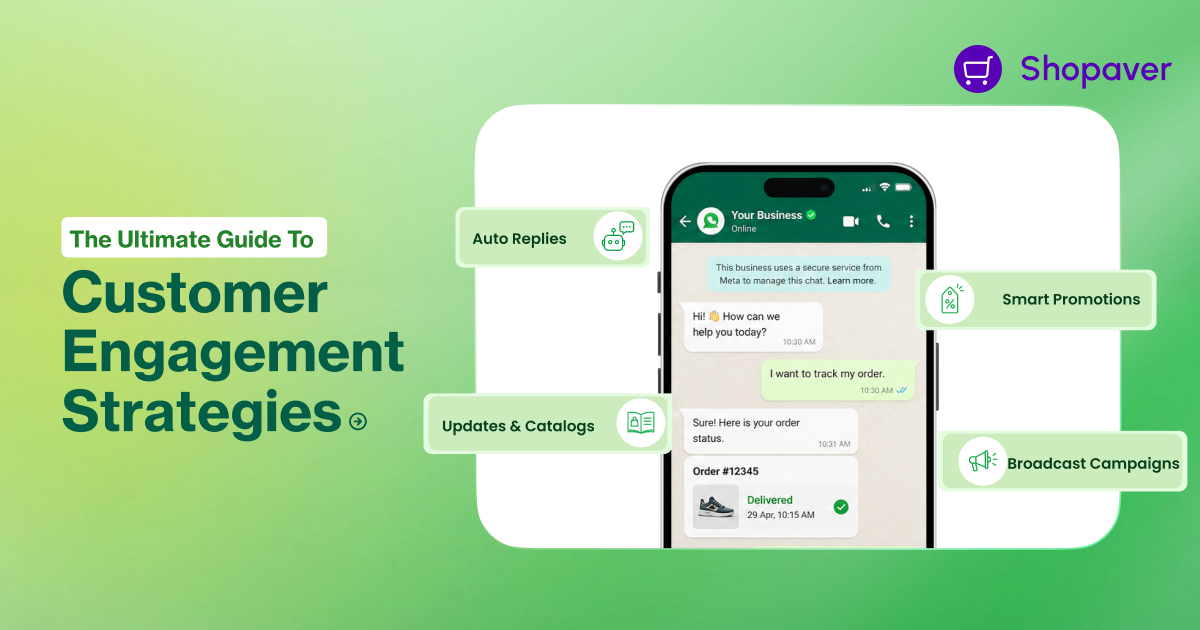
10. WhatsApp Business APIs
WhatsApp APIs help businesses:
- Automate replies
- Send broadcasts
- Share order updates
- Enable conversational commerce
- Automate customer support
A reliable customer engagement platform helps businesses centralize all communication channels.
Businesses searching for the best customer engagement platform should prioritize automation, analytics, scalability, and omnichannel support.
Marketing Messages and Notifications
Businesses use engagement marketing campaigns to stay connected with users throughout the lifecycle.
1. Common Campaign Types
- Product launches
- Promotional offers
- Re-engagement campaigns
- Personalized recommendations
- Seasonal sales notifications
Strong engagement marketing campaigns improve conversions and long-term relationships.
Notification Messages
Transactional communication builds transparency and trust.
Examples Include
- Order updates
- Delivery notifications
- Payment confirmations
- OTP authentication
- Appointment reminders
Automation helps businesses deliver these messages instantly.
2. Performance Measurement
Tracking KPIs helps businesses optimize customer engagement strategies.
3. Engagement Rate
Measures how actively users interact with campaigns and communication channels.
4. CTR (Click-Through Rate)
Tracks how many users click on links and CTAs.
5. Customer Satisfaction Score
Measures support quality and user experience.
6. Retention Rate
Tracks how many users continue purchasing over time.
7. Conversion Rate
Measures campaign effectiveness and sales performance.
8. Response Time
Tracks how quickly businesses respond to customer queries.
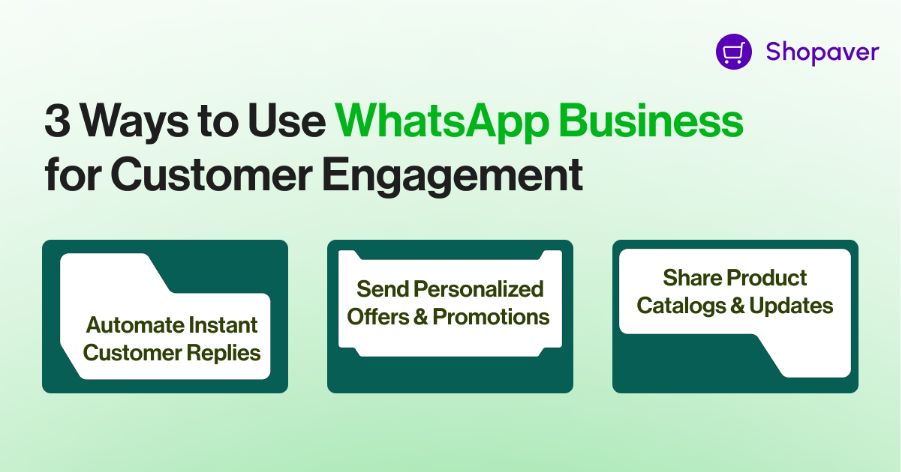
3 Ways to Use WhatsApp Business for Customer Engagement
- Automate Instant Customer Replies
- Send Personalized Offers & Promotions
- Share Product Catalogs & Updates
Get Started with WhatsApp Business Platform
The WhatsApp Business Platform enables businesses to deliver scalable and personalized communication experiences.
Key Advantages
- Automated support workflows
- Broadcast campaigns
- Conversational commerce
- Lead nurturing
- Real-time communication
- Faster response management
Businesses can use WhatsApp to improve customer engagement, automate support, and increase conversions from a single platform.
If your business wants to improve communication, boost retention, and deliver seamless customer experiences, adopting WhatsApp automation solutions can be a smart long-term investment.
Modern businesses must focus on personalization, automation, and real-time communication to stay competitive. A strong customer engagement approach improves loyalty, retention, conversions, and long-term business growth.
By combining AI-powered automation, analytics, WhatsApp communication, and omnichannel experiences, businesses can create meaningful customer relationships at scale. Investing in the right customer engagement platform and implementing a clear customer engagement strategy can help businesses improve operational efficiency while delivering better customer experiences.
FAQs
1. Why is customer engagement important for business growth?
It helps businesses improve loyalty, retention, conversions, and long-term customer relationships.
2. What is the best customer engagement platform?
The best customer engagement platform should include automation, analytics, CRM integration, and omnichannel communication capabilities.
3. What are the benefits of AI chatbots?
AI chatbots improve response speed, automate repetitive queries, and provide 24/7 support.

Narendra Kumar is a skilled content writer crafting engaging and insightful content.